Asia
Japan Travel Guide
Ancient traditions meet cutting-edge technology
3 cities12+ attractions€0 to plan
Cities in Japan
Tap any city to see its attractions and start a day-by-day plan.
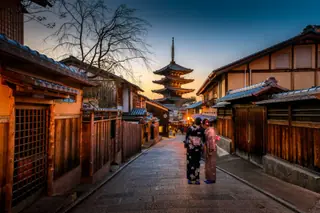
Kyoto
Kyoto was Japan's imperial capital for a thousand years, and it remains the country's soul — a city of some two thousand temples and shrines where the old Japan of tea, gardens, and geisha is still, just, a living thing. The set pieces are unforgettable: the golden pavilion of Kinkaku-ji mirrored in its pond, the endless vermilion torii gates climbing the hill at Fushimi Inari, the wooden terrace of Kiyomizu-dera over the maples, the raked gravel of Ryōan-ji's Zen garden. But Kyoto is best in its quieter registers — a morning in the Arashiyama bamboo grove before the crowds, an evening in the lantern-lit lanes of Gion hoping to glimpse a geiko, a kaiseki dinner in a centuries-old machiya townhouse. Compact and ringed by hills, it's an easy base for Nara's deer and Great Buddha too. Come in spring for cherry blossom or autumn for the maples, and book ahead — the secret is long out.
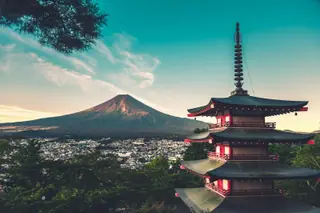
Osaka
Osaka is Japan with its sleeves rolled up — louder, funnier, and hungrier than Tokyo, and proud of it. This is the nation's kitchen, the birthplace of street food culture, and you come here above all to eat: takoyaki octopus balls, okonomiyaki savoury pancakes, kushikatsu skewers, all best chased down the neon canyon of Dōtonbori, where a giant mechanical crab and the Glico running man preside over the canal. Graze the stalls of Kuromon Ichiba market by day and the alleys by night. Between meals there's the handsome reconstructed Osaka Castle in its moated park, the retro-futurist Shinsekai district, and some of the warmest, most outgoing people in Japan — Osakans have a reputation for cracking jokes with strangers. Centrally placed on the Kansai region's rail network, it's also the ideal base for day trips to Kyoto, Nara, and Kobe. Skip the polish; come for the appetite.
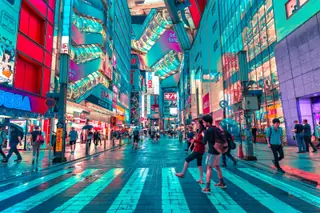
Tokyo
Tokyo is less a single city than a constellation of them, each district its own world, and the thrill is in the switch between them. Cross the organised chaos of Shibuya's scramble, then ten minutes later stand in the hushed forest around Meiji Shrine. Trade the teenage fashion of Harajuku for the old-Tokyo temple lanes of Asakusa, the electric arcades of Akihabara for a hushed sushi counter in Ginza. It is vast, immaculate, and astonishingly easy to navigate. It is also, by many measures, the best food city on earth — more Michelin stars than anywhere, but the revelation is just as likely to be a bowl of ramen, a department-store food hall, or a six-seat yakitori joint under the train tracks. Endlessly safe, polite, and efficient, yet pulsing with neon energy after dark, Tokyo manages to feel like the future and a deeply traditional place at the same time.
Planning Your Japan Trip
Japan is one of Asia's most rewarding destinations. Use EME's free multi-city itinerary builder to combine cities, set your interests (history, food, nature, architecture, and more), and get a personalized day-by-day plan with attractions and travel times built in. Travel for everyone — inclusive, accessible, LGBTQ+ welcoming. No paywall, no sign-up to start.
Currency
JPY
Language
Japanese
Visa
Visa-free for many nationalities up to 90 days.
Free trip builder
Combine Japan with neighboring countries, pick your interests, and get a day-by-day plan — free, no credit card, no sign-up to start.
Looking for somewhere else? Browse all destinations or plan a multi-country trip across Asia and beyond.
Browse all destinations