Europe
Germany Travel Guide
Engineering marvels, beer culture, and rich history
5 cities20+ attractions€0 to plan
About Germany
Germany is a country of strong regions rather than one centre. Berlin is the big draw: history you can stand on, from the Wall to the Reichstag, plus a creative, late-night city of galleries and neighbourhoods. Munich is Bavaria's polished capital, with beer halls, palaces and the Alps an hour away. Cologne has its cathedral and a relaxed Rhineland character, Frankfurt its skyline and wine taverns, and Aachen, right on the Belgian and Dutch border, Charlemagne's cathedral and thermal springs.
Fast trains connect them all, and Germany pairs naturally with Belgium, the Netherlands or Austria. Christmas markets, from late November, are a highlight across the country.
It suits travellers interested in history, architecture, museums and beer culture. Trains are frequent but punctuality has slipped in recent years, so leave margins for connections. Cities are spread out, so pick two or three rather than trying to see everything; a week is a good start.
Cities in Germany
Tap any city to see its attractions and start a day-by-day plan.
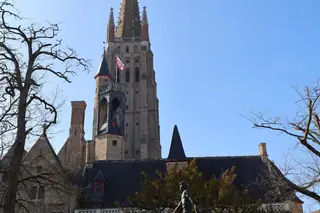
Aachen
Aachen sits at the point where Germany meets Belgium and the Netherlands, and for a few decades around the year 800 it was effectively the capital of Western Europe — the favoured seat of Charlemagne, who is buried here. His legacy is the city's treasure: Aachen Cathedral, with its octagonal Palatine Chapel, was the first German site inscribed on the UNESCO World Heritage list, and for six hundred years German kings were crowned beneath its golden mosaics. The adjoining treasury holds some of the finest medieval goldwork in northern Europe. The rest of Aachen is a compact, easygoing spa town. Hot sulphur springs drew the Romans and still feed its bathhouses; the lively market square sits beneath a Gothic town hall raised on Charlemagne's old palace. It's a city of students and gingerbread — the spiced Aachener Printen are sold from every other shopfront — and its three-country borderland setting makes it an effortless stop between the Rhineland and the Low Countries.
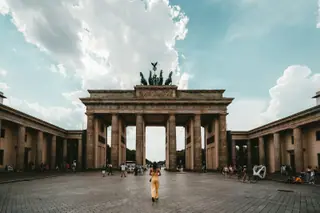
Berlin
Berlin is a capital unlike any other in Europe — a city that wears its turbulent 20th century openly and has turned the scars into one of the continent's most creative places. The history is unavoidable and worth facing head-on: the surviving stretch of the Wall at the East Side Gallery, painted by artists from around the world; the sombre, swaying field of the Holocaust Memorial; the glass dome Norman Foster set atop the rebuilt Reichstag; Checkpoint Charlie and the grand sweep through the Brandenburg Gate down Unter den Linden. What makes Berlin addictive, though, is its restless present. Museum Island holds five world-class collections including the Pergamon's monumental antiquities, while former factories and bunkers now house galleries, techno clubs, and street-food markets. Neighbourhoods each have their own character — leafy Prenzlauer Berg, edgy Kreuzberg, gallery-lined Mitte — and the whole city is famously cheap, green, and open-minded. Give it time; Berlin reveals itself slowly.
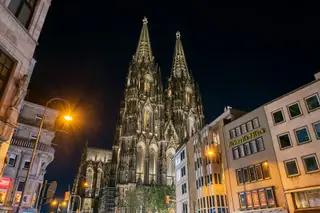
Cologne
Cologne is built around one of the most astonishing buildings in Europe: a Gothic cathedral so vast it took more than six hundred years to finish, its twin filigree spires soaring above the Rhine and the train station at its feet. Step inside for the soaring nave and the golden shrine said to hold the relics of the Three Kings, then climb the tower for the view over the river and the rooftops. The Dom alone justifies the trip, and it greets you the moment you step off the train. But Cologne is a warm, unpretentious city beyond its cathedral. The reconstructed Old Town tumbles down to the riverbank, lined with brewhouses serving Kölsch — the local beer poured in small glasses and kept coming until you cap it — alongside Roman ruins, modern art at the Museum Ludwig, and a clutch of Romanesque churches. Famously open and good-humoured, it throws one of Europe's biggest Carnival celebrations each spring, when the whole city spills into the streets in costume.
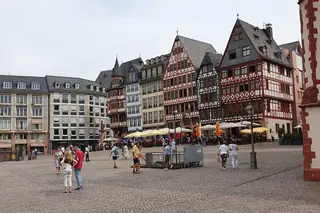
Frankfurt
Frankfurt is Germany's financial capital and the one city in the country with a true skyline — a cluster of glass towers that has earned it the nickname Mainhattan, after the Main river that runs through it. It's the home of the European Central Bank and a major airport hub, so most travellers first meet it on business or in transit, but it rewards anyone who lingers. Ride or climb up the Main Tower for the panorama, then come down to the riverbank, where a string of first-rate museums lines the Museumsufer. Frankfurt also hides an older heart. The Römerberg square, with its photogenic half-timbered houses and stepped-gabled town hall, was painstakingly rebuilt after the war, and the newly reconstructed Old Town beside the cathedral returns a medieval streetscape to the city centre. Cap a day in the cider taverns of Sachsenhausen across the river, where the local apple wine is poured in ribbed glasses. Central to Germany and to Europe's rail and air networks, it's a natural hub for a wider trip.
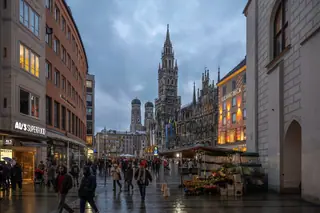
Munich
Munich is Germany at its most genial — the prosperous Bavarian capital where Alpine tradition, beer-hall conviviality, and serious culture sit comfortably together. The heart is the Marienplatz, where the neo-Gothic New Town Hall stages its glockenspiel show and the twin onion domes of the Frauenkirche rise behind. From there it's a short walk to the cavernous Hofbräuhaus, the royal Residenz palace, and the vast green sweep of the English Garden, where locals surf a standing river wave and drink under the chestnut trees of the beer gardens. Munich also takes its art seriously, with the three Pinakothek galleries spanning old masters to modern, and it's the gateway to some of Germany's greatest day trips — Ludwig II's fairy-tale Neuschwanstein Castle, the Bavarian Alps, and the lakes to the south. Time your visit for Oktoberfest and the city swells with millions; come any other time and you get the same warmth at a gentler pace. It is the easiest, most welcoming introduction to southern Germany.
Explore Germany by theme
Every attraction we include in Germany itineraries, grouped by what you're into.
Premium & Luxury
Premium tours in Germany
Want a human to plan every detail? A personal EME concierge researches and books your Germany trip from scratch — hand-picked hotels, private transfers, restaurant reservations, and 24/7 on-trip support. Concierge fee from €200 per adult per day — hotels, transport and meals billed at cost, quoted for Germany before you commit.
- Hand-picked hotels, not algorithm lists
- Private transfers arranged, billed at cost
- Restaurant reservations pre-arranged
- One concierge, start to finish
Planning Your Germany Trip
Germany is one of Europe's most rewarding destinations. Use EME's free multi-city itinerary builder to combine cities, set your interests (history, food, nature, architecture, and more), and get a personalized day-by-day plan with attractions and travel times built in. Travel for everyone — inclusive, accessible, LGBTQ+ welcoming. No paywall, no sign-up to start.
Currency
EUR
Language
German
Visa
Schengen visa for non-EU citizens. 90 days in 180-day period.
Free trip builder
Combine Germany with neighboring countries, pick your interests, and get a day-by-day plan — free, no credit card, no sign-up to start.
Looking for somewhere else? Browse all destinations or plan a multi-country trip across Europe and beyond.
Browse all destinations