Historical Sites in China: 23 Places to Visit
23 historic sites across 9 cities in China, each one a stop you can drop straight into a free day-by-day itinerary.
In Beijing
Beijing travel guide →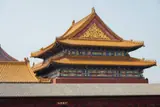
History4h
Forbidden City
Five centuries of Ming and Qing emperors behind vermilion walls — golden roofs, vast courtyards, and the Hall of Supreme Harmony at the heart.
History4h
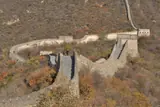
Mutianyu Great Wall
The most photogenic restored stretch of the Great Wall — watchtowers riding forested ridgelines, reachable by cable car and walked end to end.
History2h
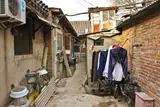
Nanluoguxiang Hutongs
A grid of grey-brick courtyard alleys lined with snack stalls and tiny bars — the most atmospheric stretch of old Beijing.
History3h
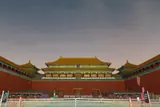
National Museum of China
One of the world's largest museums, tracing five millennia of Chinese civilisation in bronzes, jade, and dynastic treasure.
History1h
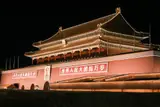
Tiananmen Square
The vast ceremonial heart of the capital — Mao's mausoleum, the Monument to the People's Heroes, and the gate onto the Forbidden City.
In Chengdu
Chengdu travel guide →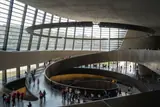
History2h
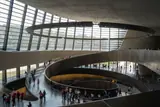
Chengdu Museum
A gleaming museum on Tianfu Square telling the city's story through shadow puppets, brocade, and Shu kingdom finds.
History2h
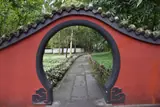
Du Fu Thatched Cottage
The garden retreat where the great Tang poet wrote, now a tranquil museum of bamboo, streams, and verse.
History2h
Jinsha Site Museum
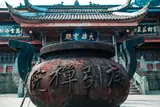
A Bronze-Age ritual site unearthed in the city — gold sun-bird emblems and ivory beside the original dig pit.
History4h
Leshan Giant Buddha
A 71-metre Tang Buddha carved into a river cliff — the largest stone Buddha on earth, reached by boat or cliff stair.
History2h
Wuhou Shrine
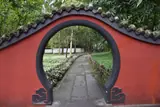
China's most revered temple to the heroes of the Three Kingdoms, set among cypress gardens and the tomb of Liu Bei.
In Xi'an
Xi'an travel guide →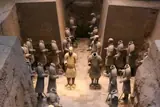
History2h
Han Yangling Mausoleum
The tomb of a Han emperor displayed in situ — glass walkways over pits of miniature terracotta figures and animals.
History2h
Huaqing Palace
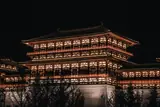
Imperial hot-spring retreat at the foot of Mount Li, tied to the Tang romance of Emperor Xuanzong and Yang Guifei.
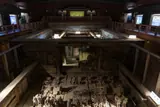
History3h
Shaanxi History Museum
A treasure-house of the dynasties that ruled from here — Tang gold, Zhou bronzes, and Silk Road relics.
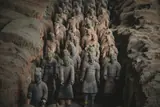
History4h
Terracotta Army
Thousands of life-size clay warriors standing guard over the first emperor's tomb — each face unique, ranked in earthen battle trenches.
In Guilin
Guilin travel guide →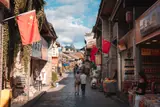
History2h
Daxu Ancient Town
A 1,000-year-old trading town on the Li River, cobbled lanes of timber shopfronts largely untouched by tourism.
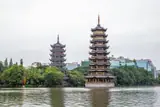
History2h
Jingjiang Princes' City
A walled Ming princely palace older than Beijing's Forbidden City, wrapped around Solitary Beauty Peak.
In Hangzhou
Hangzhou travel guide →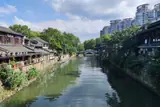
History2h
Grand Canal
The southern end of the world's longest ancient canal — Gongchen Bridge, guild halls, and a lantern-lit night cruise.
History2h
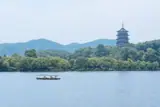
Zhejiang Provincial Museum
A lakeside museum of regional treasure — celadon, a 7,000-year-old paddle, and Wu-Yue gold by the water.
In Hong Kong
Hong Kong travel guide →
History2h
Hong Kong Museum of History
A walk through the territory's story — from fishing villages and opium wars to the modern metropolis.
History1h
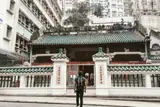
Man Mo Temple
An atmospheric 1840s temple to the gods of literature and war, hung with vast smoking incense coils.
In Sanya
Sanya travel guide →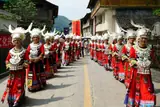
History3h
Binglanggu Li & Miao Village
A living heritage park of Hainan's indigenous peoples — bark-cloth weaving, tattoo elders, and bamboo-pole dance.
In Shanghai
Shanghai travel guide →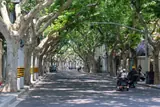
History2h
French Concession
Plane-tree avenues of villas, boutiques, and café terraces — the leafiest, most strollable quarter of old Shanghai.
In Zhangjiajie
Zhangjiajie travel guide →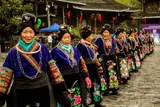
History2h
Tujia Folk Customs Park
A hillside showcase of Tujia minority life — stilt houses, the towering Jiutian ancestral hall, and folk craft.