Art & Museums in China: 14 Places to Visit
14 museums and art spots across 7 cities in China, each one a stop you can drop straight into a free day-by-day itinerary.
In Shanghai
Shanghai travel guide →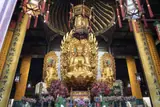
Arts & Culture2h
Jade Buddha Temple
An active Buddhist monastery built around two pale jade Buddhas brought from Burma, amber halls thick with incense.
Arts & Culture2h
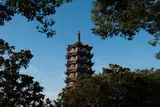
Longhua Temple
Shanghai's oldest and largest temple complex, fronted by a graceful 10th-century pagoda and a booming bronze bell.
Arts & Culture2h
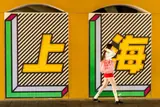
Power Station of Art
A former riverside power plant turned China's first state contemporary-art museum, its chimney a Pudong landmark.
Arts & Culture3h
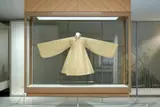
Shanghai Museum
A landmark collection of bronzes, ceramics, calligraphy, and jade in a ding-shaped building on People's Square — free to enter.
Arts & Culture2h
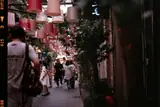
Tianzifang
A warren of shikumen alleyways turned into craft studios, tea rooms, and tiny galleries in the former French Concession.
In Beijing
Beijing travel guide →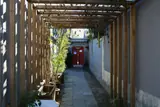
Arts & Culture3h
798 Art District
A Bauhaus-era arms factory turned contemporary-art quarter — galleries, murals, and cafés among the old red-brick workshops.
Arts & Culture2h
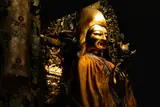
Lama Temple
Beijing's grandest Tibetan-Buddhist monastery — incense haze, gilded halls, and an 18-metre Maitreya carved from a single sandalwood trunk.
In Chengdu
Chengdu travel guide →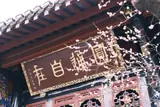
Arts & Culture1.5h
Qingyang Palace
Chengdu's oldest and largest Taoist temple, a calm courtyard complex with twin bronze goats and an octagonal pavilion.
Arts & Culture2h
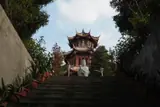
Wenshu Monastery
Chengdu's best-preserved Buddhist monastery — serene courtyards, a vegetarian hall, and the city's most loved teahouse garden.
In Hong Kong
Hong Kong travel guide →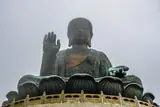
Arts & Culture3h
Tian Tan Big Buddha
A giant bronze Buddha seated above Lantau, reached by a soaring cable car and the steps beside Po Lin Monastery.
Arts & Culture1.5h
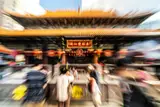
Wong Tai Sin Temple
A vivid Taoist temple where worshippers shake fortune sticks beneath red pillars and golden roofs.
In Hangzhou
Hangzhou travel guide →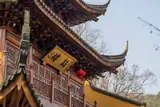
Arts & Culture3h
Lingyin Temple
One of China's wealthiest Buddhist monasteries, set against a hillside of carved Buddhist grottoes and ancient camphor trees.
In Sanya
Sanya travel guide →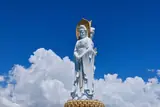
Arts & Culture3h
Nanshan Temple
A vast seaside Buddhist park crowned by a 108-metre Guanyin statue rising from the South China Sea.
In Xi'an
Xi'an travel guide →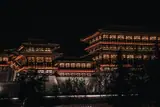
Arts & Culture2h
Tang Paradise
A re-created Tang-dynasty garden of lakeside pavilions, with an evening water-and-light spectacle.