Europe
Belgium Travel Guide
Medieval cities, chocolate, beer, and art nouveau — Europe's best-kept secret
5 cities20+ attractions€0 to plan
Cities in Belgium
Tap any city to see its attractions and start a day-by-day plan.
Antwerp
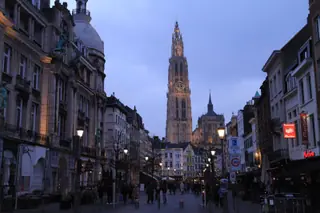
Antwerp is Belgium's sharpest, most stylish city — a working port with the swagger of a capital. For four hundred years it has been the world's diamond centre, and that wealth shows in everything from the soaring Gothic Cathedral of Our Lady to the grand Central Station, a domed "railway cathedral" routinely ranked among the most beautiful in the world. This was Rubens's city, and his presence is everywhere: in the cathedral's altarpieces and at the Rubenshuis, the house and studio he designed for himself. It is also a fashion capital out of all proportion to its size — the "Antwerp Six" put it on the map, and the MoMu fashion museum and the boutiques around the Nationalestraat keep it there. Add some of the best beer bars in the country and a riverside fortress, Het Steen, and Antwerp makes a compelling case as Belgium's most rewarding city break. Under an hour by train from Brussels.
Bruges
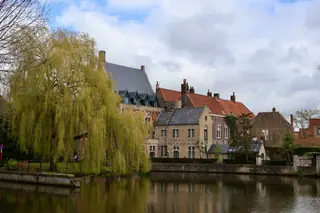
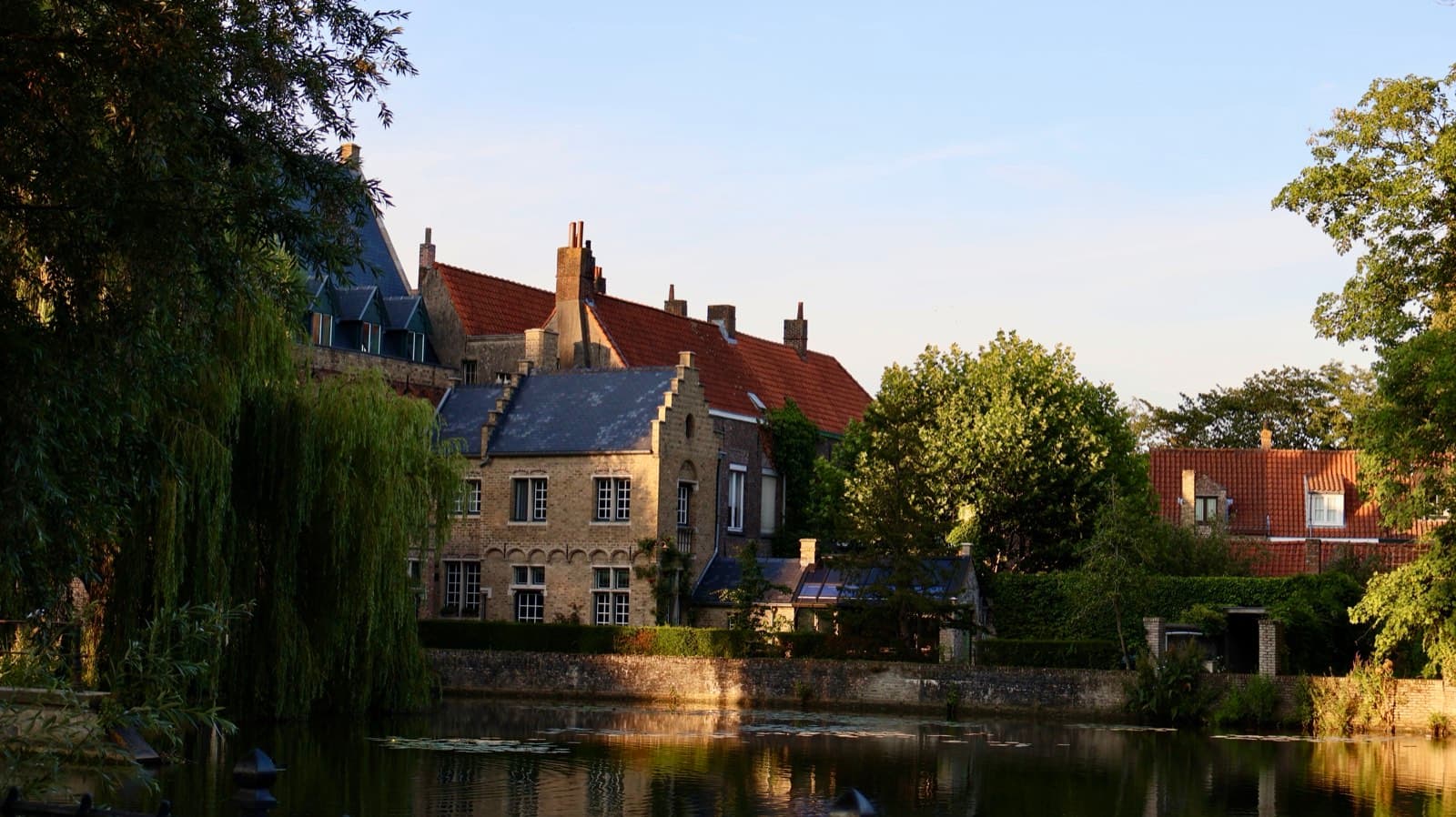
Bruges looks the way the rest of medieval Europe only does in paintings: a near-perfectly preserved web of canals, step-gabled brick houses, and cobbled lanes that has barely changed in five centuries. The whole centre is UNESCO-listed, and the easiest way to feel it is from the water — a short boat trip slides you under stone bridges and past the backs of houses no street reaches. Climb the 83-metre Belfry over the Markt for the view, then lose the day to the quiet almshouse courtyards and the swan-filled Beguinage. It earns its "chocolate-box" reputation literally — the chocolatiers here are among Belgium's best — but the trick is to stay the night. Most visitors come as a day trip from Brussels and leave by five; linger past dusk and the floodlit canals empty out, and the city becomes yours. Small enough to cross on foot, rich enough to fill two unhurried days.
Brussels
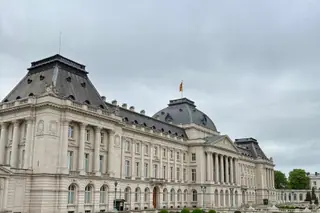
Brussels rewards anyone willing to look past its grey-suited reputation. Its heart is the Grand Place, a gilded Baroque square that Victor Hugo called the most beautiful in the world — and at night, lit gold, it makes the case. From there the city unfolds in layers: comic-strip murals on gable ends (this is the home of Tintin), the absurd little Manneken-Pis, and some of the finest Art Nouveau architecture anywhere, much of it by Victor Horta, whose townhouses are UNESCO-listed. It is also, quietly, a food city — the frites are a national religion, the chocolate and beer need no introduction, and the dining runs from Michelin tables to brown cafés unchanged in a century. Bilingual, surreal (Magritte has his own museum here), and far more characterful than its EU-capital image suggests, Brussels is best treated not as a layover but as a city in its own right — and the natural hub for reaching Bruges, Ghent, and Antwerp.
Dinant
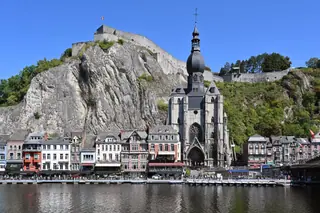
Dinant delivers one of Belgium's most dramatic first impressions: a narrow town pressed between the green River Meuse and a sheer rock cliff, with a bulbous-spired collegiate church at the water's edge and a citadel glowering from the heights above. Ride the cable car or climb the steps to the fortress for a view straight down the river valley — then come back to earth for the town's two claims to fame. The first is musical: Adolphe Sax, inventor of the saxophone, was born here, and the instrument turns up everywhere from the bridge railings to the souvenir shops. The second is the landscape: Dinant is the gateway to the Ardennes, the forested, hilly south of Belgium, and the Meuse here is made for kayaking, cycling, and slow river days. An easy and scenic escape from the flat northern cities, it shows a completely different side of the country.
Ghent
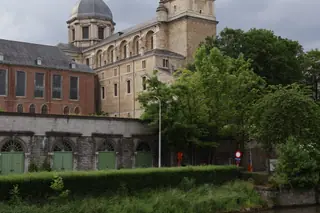
If Bruges is the museum piece, Ghent is the city that still lives — and many travellers quietly prefer it. The same medieval grandeur is here, with a row of guild houses lining the Graslei waterfront and the brooding Gravensteen castle moated in the centre, but a large student population keeps it loud, creative, and unpolished in the best way. Street art is semi-official, the bars stay open, and the whole place feels worked-in rather than curated. Its great treasure sits in St Bavo's Cathedral: the Ghent Altarpiece, Jan van Eyck's "Adoration of the Mystic Lamb", one of the most important and most stolen paintings in the world. See it early, then spend the rest of the day drifting between the two rivers, over the bridges, and into the cafés of the Patershol quarter. Forty minutes from Brussels and far less crowded than its famous neighbour, Ghent is the most underrated city in Belgium.
Guided Group Travel
Package tours in Belgium
Fully organised, small-group departures. Hotels, guides, transfers, and site fees — all included. EME has been operating tours since 2008.
Accessible Travel · Verified firsthand
Wheelchair-accessible travel in Belgium
Belgium is one of the easiest countries in Europe to cross by wheelchair — a dense, flat rail network with booked boarding assistance links every city we route through. The catch is the medieval cobbles once you arrive, so we plan the ground game city by city.
Trains· SNCB / NMBS
GoodModern SNCB rolling stock is low-floor with a wheelchair space and accessible toilet. Intercity routes between Brussels, Bruges, Ghent, and Antwerp are step-free with pre-booked assistance; a handful of rural halts still need the portable ramp.
Platforms & boarding
GoodMajor stations — Brussels-Midi, Antwerp-Central, Bruges, Ghent-Sint-Pieters — have lifts to every platform and staff who bring a boarding ramp to bridge the platform-to-train gap. Level boarding is not yet universal, which is exactly why we book the assistance rather than leave it to chance.
SNCB/NMBS boarding assistance is free at 174 staffed stations and is booked at least 24 hours ahead (48 hours for international legs) — we arrange it for you, so there is no gamble on the day.
City by city
BrusselsGood
Upper/lower town split means some hills, but the flat lower town, most museums, and the metro's accessible stations make it very manageable. Grand Place has a smooth central area with cobbles at the edges.
AntwerpExcellent
Flat, wide, and modern outside the small old core. Antwerp-Central has lifts throughout, and the MAS and riverfront are fully step-free.
GhentModerate
Flat and compact, but the historic centre is heavily cobbled — beautiful and doable at a slow roll, best paired with the accessible tram for longer stretches.
BrugesModerate
Flat but famously cobbled throughout the UNESCO core, which vibrates a wheelchair. We route the smoother streets and squares; the canal boats are not step-free, so we swap in an accessible alternative.
DinantLow
Dramatic riverside town wedged under cliffs — the citadel (408 steps / cable car) is not accessible, and streets are steep. We keep it to the flat riverfront and treat it as a scenic stop, not a climb.
Plan an accessible Belgium trip
Because a verified route means booked assistance, level boarding, and a vetted ground plan — not a self-serve gamble — we handle accessible trips as a personal concierge booking or a small-group departure, start to finish.
Premium & Luxury
Premium tours in Belgium
Want a human to plan every detail? A personal EME concierge researches and books your Belgium trip from scratch — hand-picked hotels, private transfers, restaurant reservations, and 24/7 on-trip support. Concierge fee from €200 per adult per day — hotels, transport and meals billed at cost, quoted for Belgium before you commit.
- Hand-picked hotels, not algorithm lists
- Private transfers arranged, billed at cost
- Restaurant reservations pre-arranged
- One concierge, start to finish
Planning Your Belgium Trip
Belgium is one of Europe's most rewarding destinations. Use EME's free multi-city itinerary builder to combine cities, set your interests (history, food, nature, architecture, and more), and get a personalized day-by-day plan with attractions and travel times built in. Travel for everyone — inclusive, accessible, LGBTQ+ welcoming. No paywall, no sign-up to start.
Currency
EUR
Language
Dutch, French, German
Visa
Schengen visa for non-EU citizens. 90 days in 180-day period.
Free trip builder
Combine Belgium with neighboring countries, pick your interests, and get a day-by-day plan — free, no credit card, no sign-up to start.
Looking for somewhere else? Browse all destinations or plan a multi-country trip across Europe and beyond.
Browse all destinations